
Music and Folk Dances
Traditional African religions see music and dance not only as aesthetic and rhythmic elements; they are integral parts of faith and social life. Music and dance go beyond everyday life and play important roles in spiritual communication, social solidarity and ritual.
Music: The Essential Element of Ritual
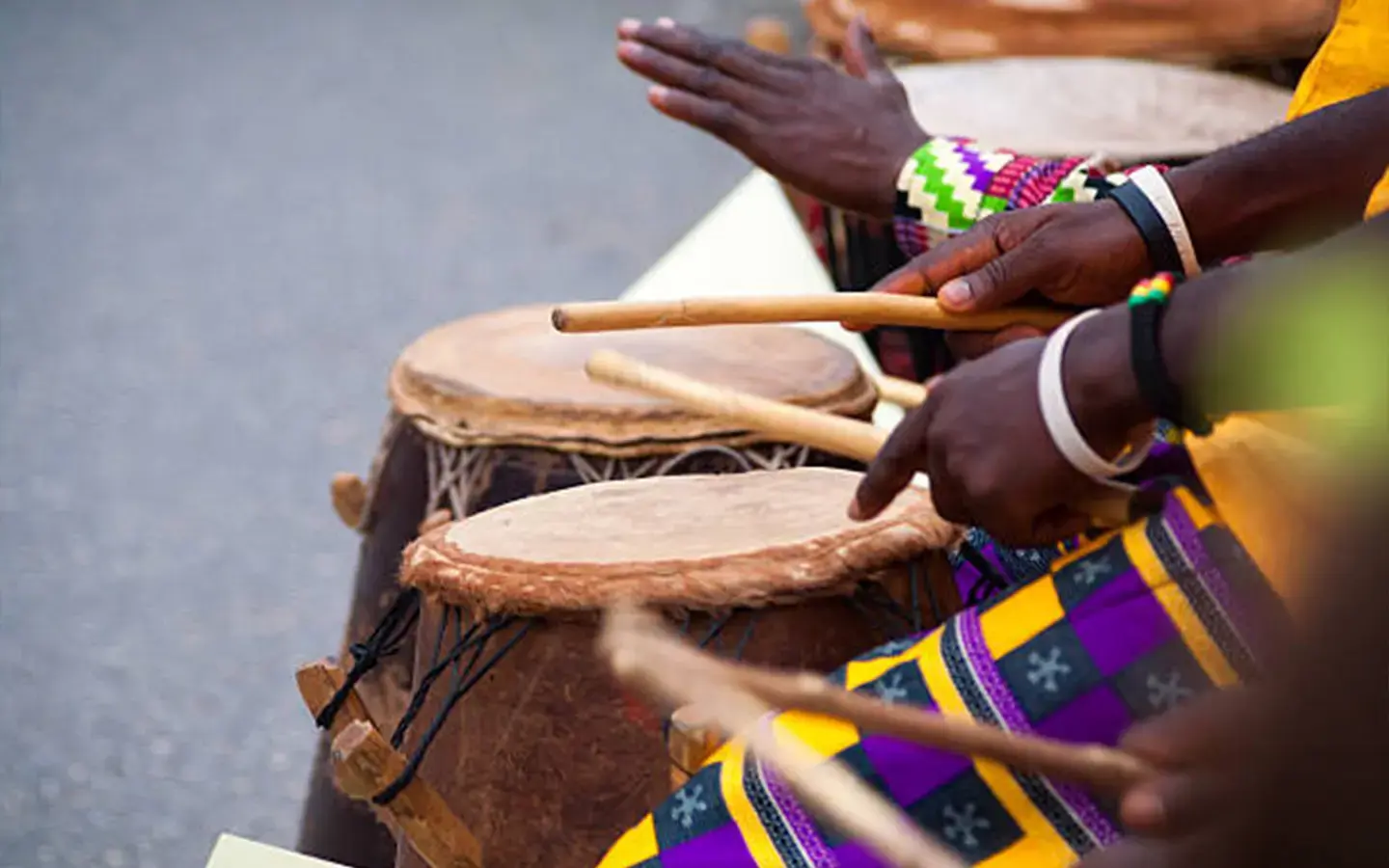
In African traditional beliefs, music is central to many religious and social events, from births to funerals, harvest celebrations to war ceremonies. Performed through rhythm, vocals, drums and other percussion instruments, music is used to express emotions, beliefs and social identities, as well as a method of communicating with spirits and the sacred.
The sounds used in music are often co-produced in the community, so participation in music is both an individual and collective experience. Music is also an important tool for religious functions such as healing rituals, spiritual purification and ancestor veneration.
Dance The Form that Carries Spiritual Expression to the Body
In traditional African religions, dance is not just an aesthetic set of movements; it offers a spiritual language, a direct connection between body and soul. Each dance movement represents a specific meaning, a sacred call or ritual symbolism.
In some societies, for example, dance is seen as a means of contacting ancestral spirits or connecting with divine beings, allowing performers to achieve trance-like states. Dances such as Ukusina in Zulu culture, for example, involve the individual in the energy of the community, creating both a social and spiritual connection.
The Combined Role of Music and Dance
In African languages, rhythm, speech and movement are inextricably intertwined. Music and dance are not only used for entertainment, but also in sacred rituals to communicate with gods and ancestors, reinforce social norms and strengthen a sense of spiritual belonging.
Therefore, in traditional African communities, music and dance are vital elements that are present in every moment of life and play an active role in many different rituals, from birth to death to festivals.