


With the right support and manual labor, African women's lives are changing
Despite all the difficulties, African women stand out with their productivity that strengthens both their families and communities. In Turkey, Africa Culture House offers us the opportunity to get to know the life journeys of African women by delivering their handcrafted products to us. Dr. Khadijah Bwanakheri Mohammed, the coordinator of the "Mama Jasiri" program, which provides young women with vocational skills to produce products that they can sell at the Africa Culture House, said, "Mama Jasiri represents hope and resilience for me. It proves that with the right support, it can be the beginning of a new and empowered story."
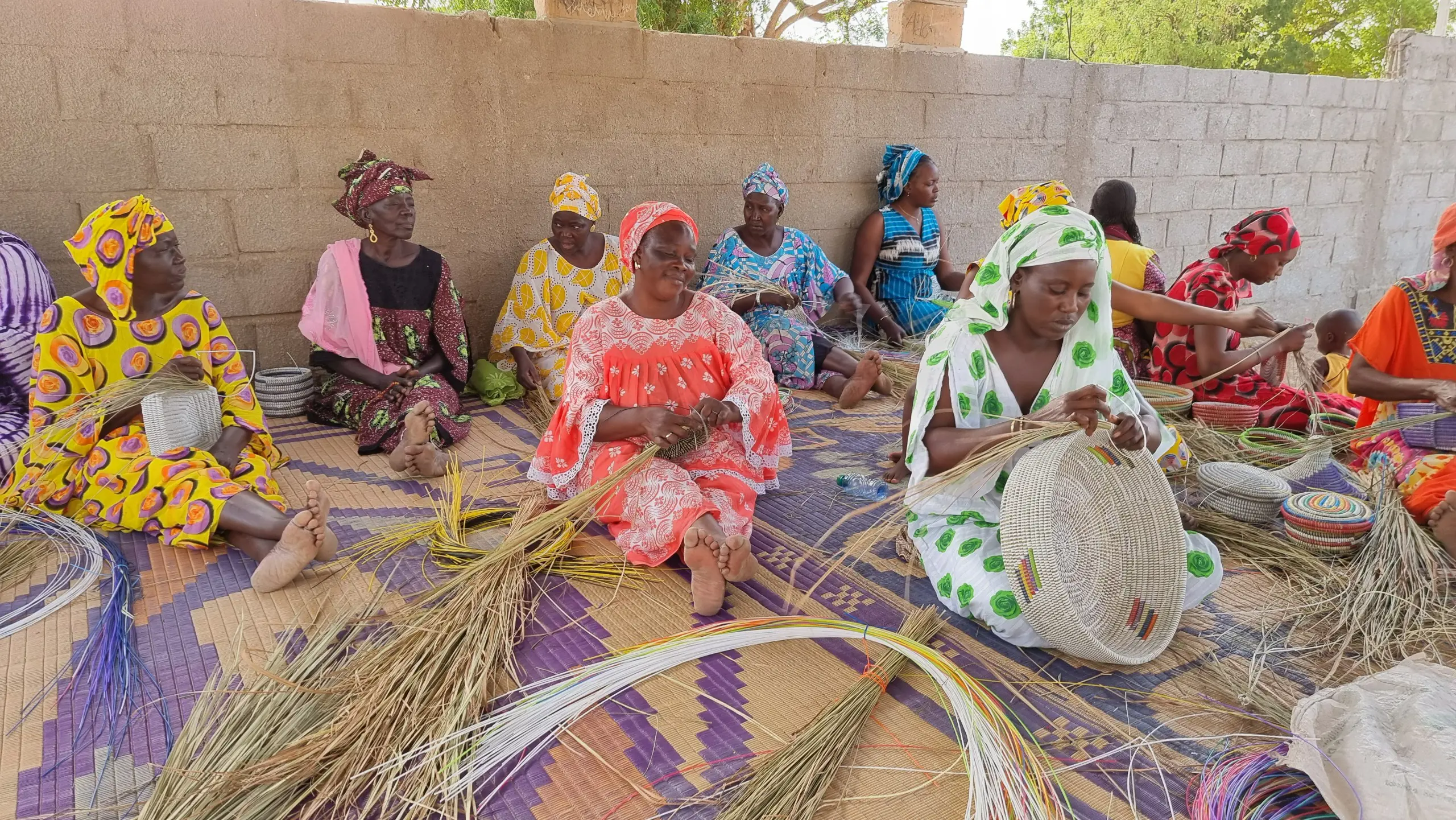
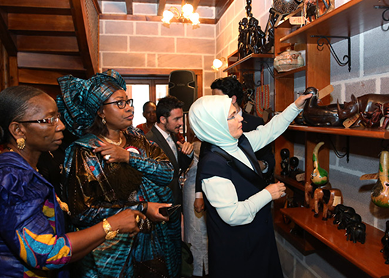
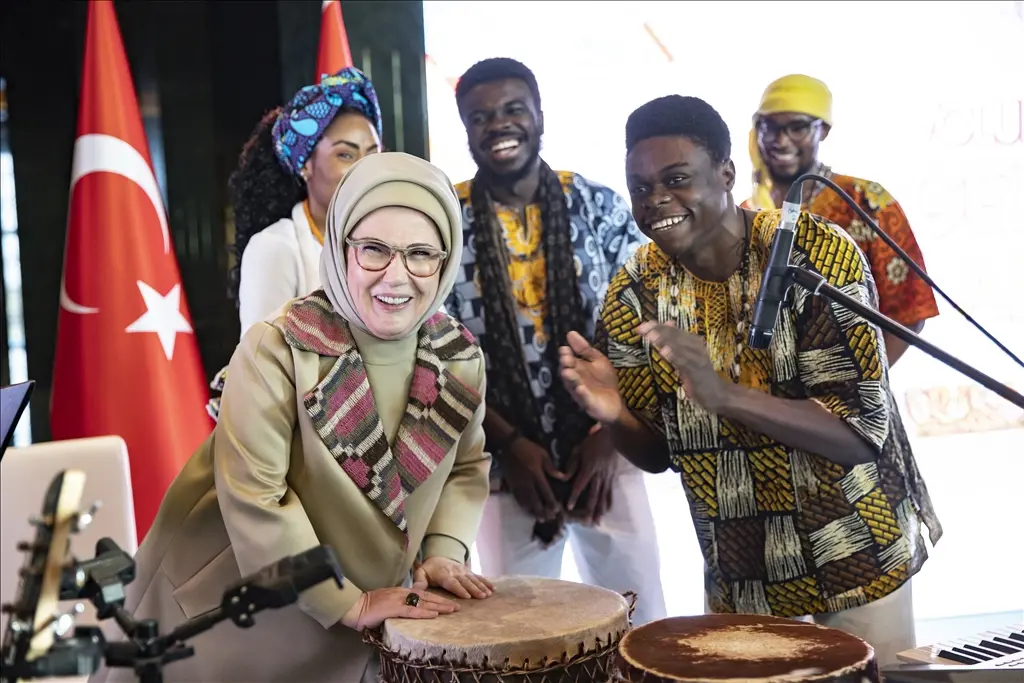
Despite material impossibilities, poverty and drought, the whole world remembers African women with their colorful clothes and big smiles. Because women in African countries stand out with their productivity in every aspect of life. Every morning, they start the day with great determination and hard work, cheerfully take care of their homes and raise their children. On the other hand, they produce handicrafts and thus add strength to both their families and their communities. The African Culture House, which was established in Ankara in 2016 under the auspices of First Lady Emine Erdoğan in 2016 on the historical basis of Turkey's Africa policy, which has political, economic and cultural dimensions as well as a humanitarian perspective, brings together the handcrafted products created by African women. It sends the products to African women at the value they deserve and sends the proceeds to African women by bringing them together with their buyers in Turkey without any profit motive. Thanks to this bridge established with sincerity and volunteerism between two continents, we have the opportunity to get to know our African sisters more closely and share their life adventures. For example, we met Mama Aisha, a 52-year-old mother of three who has been selling her products at the Mwenge Market in Dar es Salaam, thanks to the African Culture House. For ten years, Mama Aisha has been polishing wooden spoons made from ebony wood using traditional methods and making them ready for sale. Rafia, 20 years old, and Ümmügülsüm, 25 years old, who have been creating new worlds with colors in a painting workshop in Zanzibar for two years, appear again at the African Culture House with their paintings inspired by traditional Zanzibar doors and henna patterns. Atanga A., who lives in Ghana, has been making baskets for seventeen years to support her fourteen family members. Working 15 hours a day, Atanga can weave only one basket. Like these women, the products of other women who make handicrafts to provide for their families are also on display at the African Culture House.
My role is to ensure women have access to opportunities
In addition to official institutions and non-governmental organizations, there are also precious people connecting two continents. Dr. Khadijah Bwanakheri Mohammed is one of them. She lives in Tanzania. She has never been to Turkey yet. However, she has been cooperating with the African Culture House, which she met through TIKA. As one of TIKA's development projects in Tanzania, she is the coordinator of the "Mama Jasiri" program, which provides young women with vocational skills and prepares them for a brighter future with entrepreneurship training. She sends the products of the young women she trains to the African Culture House. Underlining that Tanzania is a country rich in handicrafts, Dr. Khadijah said, "Our well-known traditional products include hand-woven baskets, pottery, wood carving, beadwork from Maasai culture, leather goods and colorful fabrics such as kitenge and kanga. These handicrafts have deep cultural meaning and are used both in everyday life and in traditional ceremonies." At the African House of Culture, Mama Jasiri products include hand-woven baskets, floor mats, wall hangings and small wooden decorative pieces. Each of these products reflects both the traditional skills and creative innovation of the young women in the program. "Through our collaboration, we discovered the African Culture House initiative and the opportunities for Africans to showcase their creativity, culture and products in Turkey," said Dr. Khadijah. "Through the Mama Jasiri program, I support young women who are trained in weaving and carpentry. They produce home decoration products. My role is to mentor them and give them access to opportunities like the African House of Culture where they can bring their work to a wider audience."
New pathways for young mothers
Dr. Khadijah is also a medical doctor and founder of the Safe Haven Foundation, a non-governmental organization that provides sexual and reproductive health education for adolescents. Dr. Khadijah decided to start the foundation after losing a 14-year-old patient to complications related to teenage pregnancy. "This heartbreaking moment made me realize that young people in my community urgently need sexual and reproductive health education to prevent such tragedies. Initially, my focus was on prevention and giving adolescents the knowledge to protect themselves and make informed choices about their health and future. But as Safe Haven grew, I became very interested in young mothers who were already facing the consequences of early pregnancies," says Dr. Khadijah, who has sought new livelihoods for mothers, many of whom have had to drop out of school, have been ostracized by their families, and have no way to care for themselves or their children. "It was clear that education alone would not be enough. If I really wanted to empower these young women, I needed to provide solutions for their financial and emotional survival as well." Her thinking led to the birth of the "Mama Jasiri" program in collaboration with TIKA, which aims to provide young mothers with the tools to not only survive, but also thrive.
Independence has a ripple effect
"Mama Jasiri represents hope and resilience for me. She proves that early motherhood doesn't have to be the end of dreams, but with the right support it can be the beginning of a new and empowered story. We also provide mental health support. Because I believe that true empowerment should heal both the heart and the mind," said Dr. Khadijah. In addition to practical skills, the Mama Jasiri program also provides financial literacy, entrepreneurship and digital marketing training. Young women learn not only how to produce products, but also how to build sustainable businesses. "When a young mother starts earning her own income, she is no longer dependent on others. She can feed her child, she can make her own decisions," Dr. Khadijah explains, noting that this independence has a ripple effect, "Her community starts to look at her differently and she becomes a role model for other girls. For me, with the right support, every young mother shows that cycles of poverty and need can be broken."
Economic freedom with hemp ropes
One of the people Dr. Khadijah has mentored and encouraged to gain economic independence is Batuli Yusuf Mavura. Like Dr. Khadijah, Batuli lives in Dar es Salaam, Tanzania, and works in Kigamboni planting hemp products. "In my community, it is common for women and young girls who cannot continue their education to stay at home and not engage in any form of income-generating work. Some young girls use inappropriate ways to earn money," says Batuli, who participated in the "Mama Jasiri" project supported by TIKA in 2024. This is how she met the African House of Culture. With the encouragement of Dr. Khadijah, she started producing handmade hemp products, despite having no previous experience. "Before I learned how to make home and office decorations, handbags and hemp rope decorated mirrors from hemp rope, I had never made handmade products. To be honest, I had no skills. Mostly I saw other people making earthenware pots, cups and plates by pottery, and some even processed dried banana leaves into ropes, which they used to weave wicker and baskets. But I had never been involved in such production," says Batuli, who now personally produces hemp rope handbags, mahogany framed mirrors with hemp rope trim, and other wall decorations that are sold in the Africa House store.
Shedding light on the future with tradition
Flora Kiando is a 51-year-old woman entrepreneur from Dar es Salaam, Tanzania. Flora, a mother of four, has been producing fabric using traditional methods for 15 years. Each of her fabrics is made entirely of cotton, and she sources dyes from local markets and fabrics from neighboring regions and carefully prepares the patterns in her workshop. Flora's story is not limited to production; it is also a strong example of social solidarity. She passes on her knowledge and skills to students who come in groups to provide educational support to the children of poor families. In this way, Flora both continues the tradition and sheds light on the future. Flora's labor is further strengthened in a workshop supported by the Turkish Cooperation and Coordination Agency (TIKA). Thanks to TIKA's support, the African Culture House has become a part of Flora's story. Thus, her products have the opportunity to reach more people, and these special fabrics reach more people thanks to the African Culture House. These fabrics, which carry the unique colors of Tanzania and Flora's determination, are not only a textile product; but also a representative of a cultural heritage.
31/08/2025